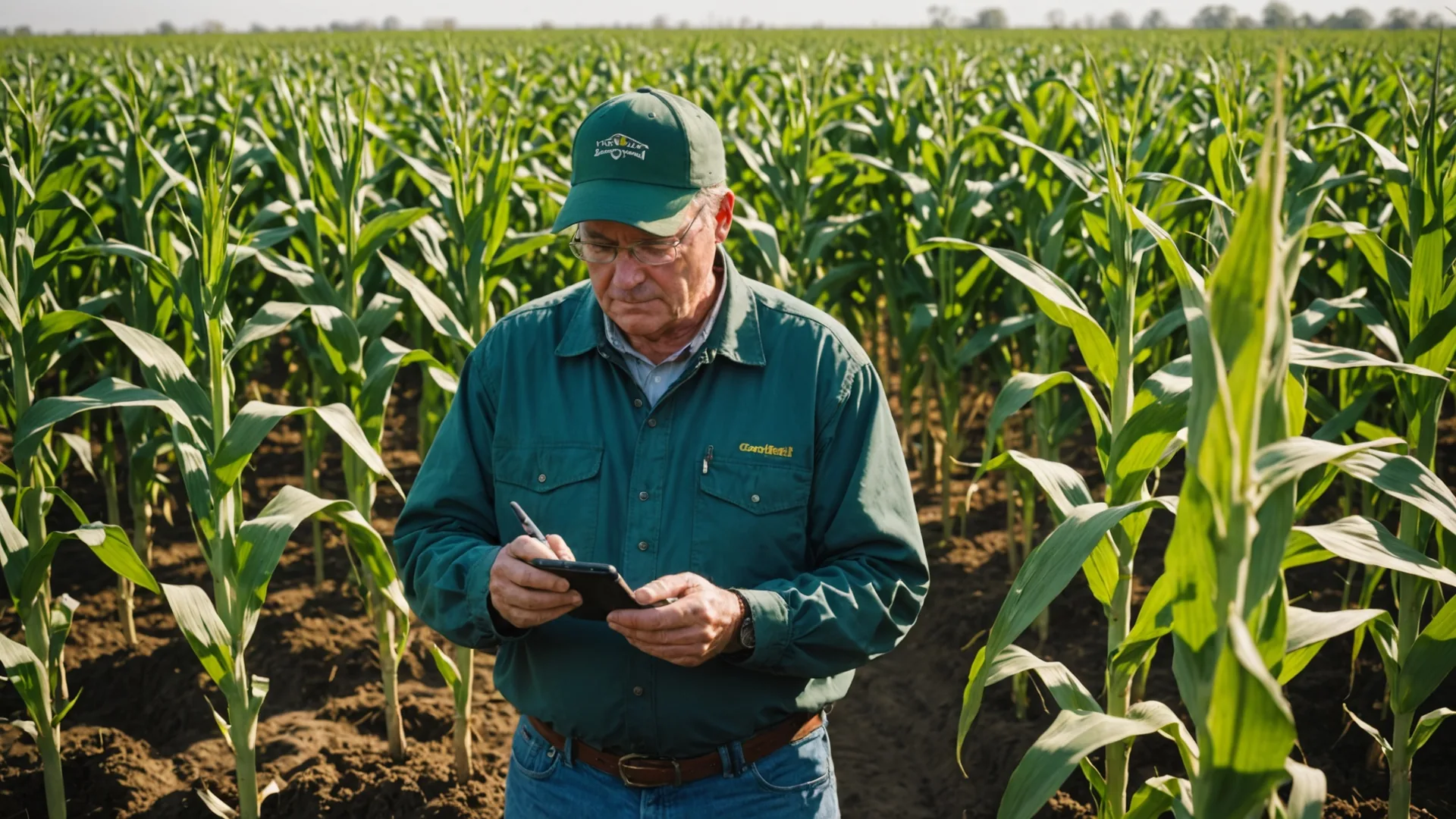

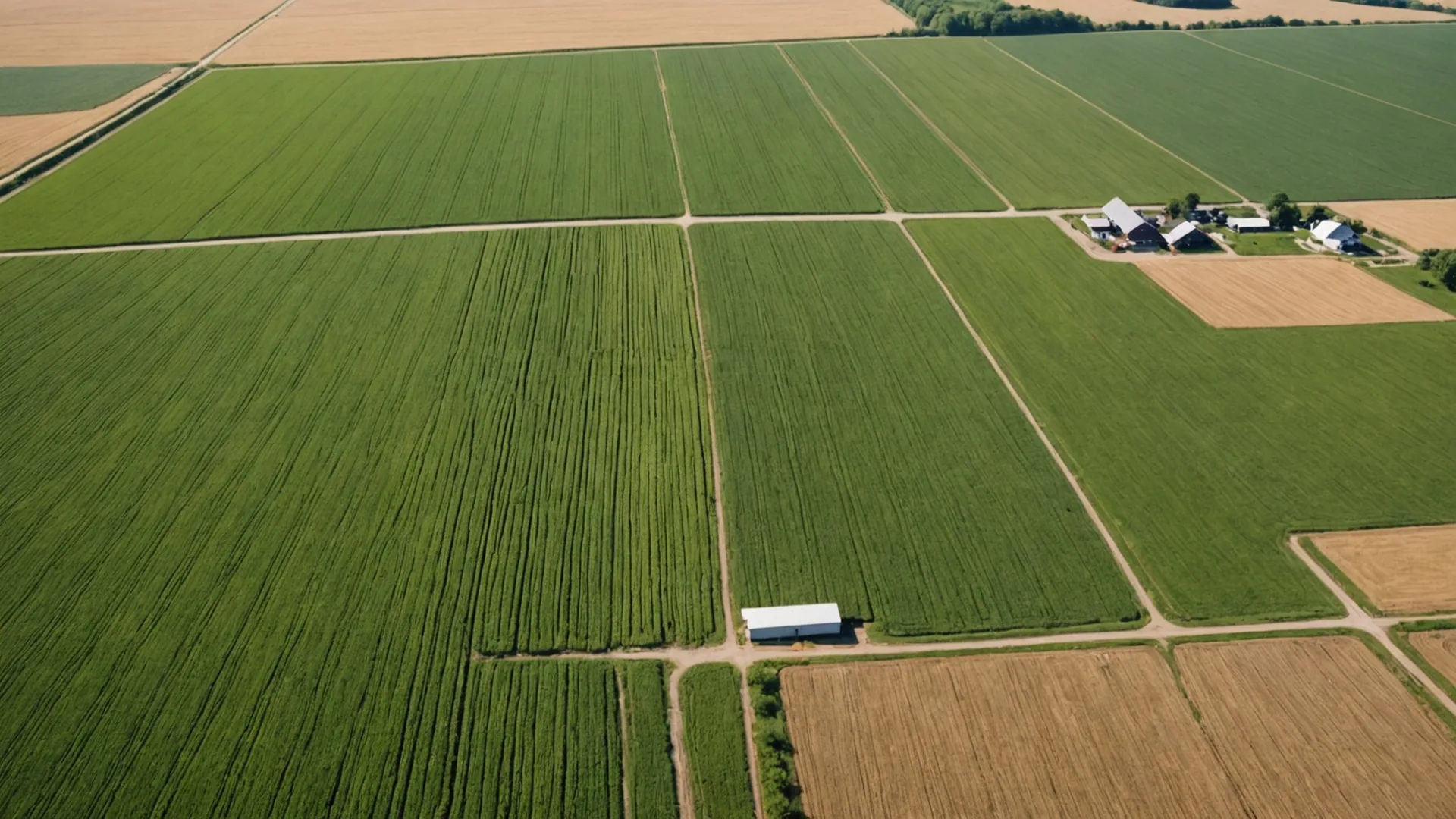
Precision agriculture has a scale problem in the way it's usually discussed. Most of the research trials, vendor case studies, and conference presentations feature operations running 10,000-plus acres with multiple agronomists on staff and a willingness to treat the first two seasons of adoption as a learning investment. For those operations, the math works out quickly. The variable-rate fertilizer savings on 8,000 acres cover a lot of subscription costs and consulting fees.
But the majority of US row-crop operations don't look like that. USDA data from recent agricultural census reports shows most corn and soybean farms in the Midwest are in the 500-2,000 acre range. Family operations with one or two full-time operators, limited dedicated staff time for data analysis, and a much tighter line between "the technology paid for itself" and "the technology was a line item that hurt this year's margin."
The honest answer to whether precision ag pays at that scale is: it depends on which tools you choose, what problem you're solving, and whether the technology cost structure fits the operation size. Some precision ag tools have genuinely bad economics below 5,000 acres. Others pencil out well at 800. The key is knowing which is which before you commit.
The Cost Structure Is the Starting Point
Precision agriculture tools come in at least three very different cost models, and they have dramatically different break-even math at sub-2,000-acre scale.
Hardware-heavy tools — variable-rate applicator controllers, prescription-rate spreader upgrades, RTK GPS autosteer — have high upfront capital costs that spread across acres. At 10,000 acres, a $45,000 VRT system costs $4.50/ac to amortize over 10 years. At 800 acres, that same system costs $5.63/ac/year — before the cost of the prescriptions it needs to execute, before operator training time, before the agronomist who has to build the prescription files. These tools don't pencil out the same at small scale unless you have enough variation in your fields to justify the input savings.
Service subscriptions — decision intelligence platforms, soil analysis services, satellite imagery subscriptions — have a different math. If the subscription is priced per acre, it scales linearly and the ROI test is: does this tool pay for itself in yield gains or input savings per acre, regardless of total acreage? A $7/ac yield intelligence service that consistently returns 8 bu/ac of corn at $4.50/bu is paying for itself 5x over on a 600-acre farm just as well as on a 6,000-acre farm. The ROI per acre is the same; the total dollar savings is smaller, but so is the total cost.
Custom application services — hiring a custom applicator with VRT equipment to apply a prescription map rather than buying the equipment yourself — can give smaller operations access to hardware-dependent precision ag without the capital outlay. This shifts the economics from fixed cost to variable cost per acre, which often works better at smaller scale.
Understanding which bucket any tool falls into is step one. A tool that requires you to own the hardware will have different break-even math than a service that provides the decision support without requiring equipment investment.
Variable-Rate Application: Where the Math Gets Real
Variable-rate fertilizer application is often the flagship precision ag ROI story. The premise is sound: your fields aren't uniform, so applying a flat rate across the whole field either over-applies in productive zones (wasted input cost) or under-applies in lower-productivity zones (missed yield in those zones). VRT prescription maps apply more where the soil needs more and less where it doesn't.
The ROI on VRT depends heavily on how much variation actually exists in your fields. A field with a coefficient of variation in soil phosphorus above 30% — meaning significant spatial variability — is a strong candidate for variable-rate P application. A field with 15% CV in P is much less compelling. You can compute this from your soil sample data before you spend anything on VRT services.
In our experience looking at Midwest field data, about 40-50% of fields have enough soil nutrient variation to generate meaningful VRT savings on phosphorus and potassium. For those fields, variable-rate P and K prescriptions typically reduce fertilizer cost by $8-18/ac while maintaining or slightly improving yield in deficit zones. For the other 50-60% of fields with lower variation, a well-calibrated flat rate is the more cost-effective approach.
This matters for the sub-2,000-acre operator because it means precision ag ROI is field-specific, not operation-specific. Running a VRT prescription on every field in your operation is not the optimal approach even if you have the equipment. Identifying the 35-40% of your acres where field variation is high enough to justify the precision approach is the better strategy — and it's a strategy that works at 900 acres just as well as at 9,000 acres.
Satellite-Based Scouting: Low Capital, High Return
One area where smaller operations often get outsized return is satellite-imagery-driven scouting prioritization. Traditional crop scouting on a 1,200-acre operation might cover 12-15% of field area in a typical week — standard transect scouting is time-limited. That means 85-88% of your field area is unvisited each week. Problem zones that don't fall on a scout's transect go undetected until the damage is visible from a field road.
Satellite-based NDVI anomaly detection changes the geometry of that problem. Instead of randomized transect coverage, you can focus scouting time on the zones that satellite data flags as stress-anomalous this week. On a 1,200-acre operation with 8 hours of available scouting time per week, that's the difference between visiting problem zones systematically and visiting random field sections.
The ROI here isn't captured as a neat $/ac number on a spreadsheet. It shows up as prevented yield loss in zones where early detection and intervention prevented a 15 bu/ac stress drag from becoming the final yield outcome for that zone. We've tracked seasons where a 1,200-acre operation caught a mid-July drought stress anomaly in one field's low-OM zones three weeks before visible stress, adjusted their irrigation priority, and prevented what the stress trajectory suggested would have been a 12-18 bu/ac deficit in those zones. That's $54-81/ac of prevented loss at $4.50/bu corn on roughly 120 acres of anomaly-flagged zone — $6,500-$9,700 of yield protection on a field that otherwise would have been treated the same as every other field.
A sub-2,000-acre operation that captures that kind of yield protection event once in a three-year period has covered most of a decision-intelligence subscription cost on a single field. That's not a guaranteed outcome — it depends on whether you have a stress event to detect and whether you have the management response available to act. But the logic holds at 1,000 acres with the same math as at 5,000.
Nitrogen Timing: The Highest-Value Single Decision
Of all the precision ag decisions available to a row-crop operator, nitrogen timing for corn may be the single highest-return decision on a per-dollar-invested basis at smaller scales. The research is unambiguous: applying sidedress nitrogen within the optimal 10-14 day window for your specific field and weather conditions returns materially more bushels per pound of N than applications made outside that window.
The challenge is identifying that window accurately. Applying too early risks nitrate loss if rain events occur before the crop can take up the N. Applying too late leaves the crop N-deficient during peak demand around V10-V12. The optimal timing varies by soil type, organic matter, recent rainfall, and projected uptake rate — it's not the same date on every field.
At 1,500 acres, a 6-day improvement in average sidedress timing accuracy translates to roughly 4-8 bu/ac improvement in nitrogen use efficiency across your corn acres. At $4.50/bu corn and a subscription service cost of $7/ac, that's a 3-5x return on investment from timing optimization alone, before counting any benefit from scouting prioritization or yield map interpretation.
The key qualifier is "improvement in accuracy." If you're already timing your sidedress applications well — doing soil nitrate tests and adjusting based on field conditions — the marginal improvement from a data-driven timing recommendation is smaller. The return is highest for operations currently timing by calendar date or by equipment availability rather than by field condition.
What Doesn't Pencil Out Below 2,000 Acres
Being straight about what doesn't make economic sense at smaller scales matters as much as making the case for what does. Some precision ag tools have cost structures that simply don't recover at sub-2,000-acre scale:
- Dedicated in-field sensors at high density — soil moisture probes at 4-6 locations per field are expensive enough that the cost per acre on a 200-acre field is hard to recover from irrigation efficiency gains
- Private contracted satellite tasking — purchasing dedicated satellite passes for your operation specifically is cost-justified for very large operations with specific needs; at 1,500 acres, public satellite data at 10-meter resolution is sufficient and free
- Multi-day intensive agronomic consulting retainers — hiring an agronomist at $120-200/day for 30 days per season runs $3,600-$6,000 before any inputs; the fixed cost per acre on 900 acres is $4-6.67/ac for the consulting alone, which changes the ROI math on any recommendations they provide
- Full-season variable-rate seeding on every field — the prescription development, equipment calibration time, and seed inventory management costs add up; VRS is most justified on your highest-variation fields, not as a blanket practice
A Decision Framework for Smaller Operations
The question to ask about any precision ag tool is: does the per-acre cost structure match the per-acre return, independent of total acreage? Tools that pass this test work at any scale. Tools that require large total acre counts to recover fixed costs don't.
For a 1,200-acre operation evaluating what to prioritize:
- Pull your soil sample data and compute CV by field for P, K, and pH. Any field above 25% CV is a VRT candidate for those nutrients. Do that calculation before spending on VRT services.
- Look at your last 4 seasons of yield maps by zone. Where is the unexplained variation concentrated? That's where decision intelligence pays most.
- Evaluate service subscriptions against a simple per-acre test: does this tool need to save me X bu/ac or $Y/ac to cover its cost? For a $6/ac subscription, X is about 1.3 bu/ac at current corn prices. That's a low bar to clear if the tool is actually giving you better timing or scouting prioritization information.
- For hardware-intensive tools, calculate the break-even acre count honestly. Most hardware-based precision ag investments need 3,000+ acres to return within 5 years based on typical input savings rates. If you're at 1,200 acres, shared equipment with a neighbor or custom application is usually the better path.
Precision agriculture is not inherently a large-farm technology. The tools that deliver per-acre returns at low subscription cost scales just as well at 1,000 acres as at 10,000. What doesn't scale is the hardware-intensive approach that requires large acreage to amortize fixed costs. Knowing the difference is what lets a smaller operation pick the tools that actually pay — and leave the ones that don't for operations where the scale math works out differently.